
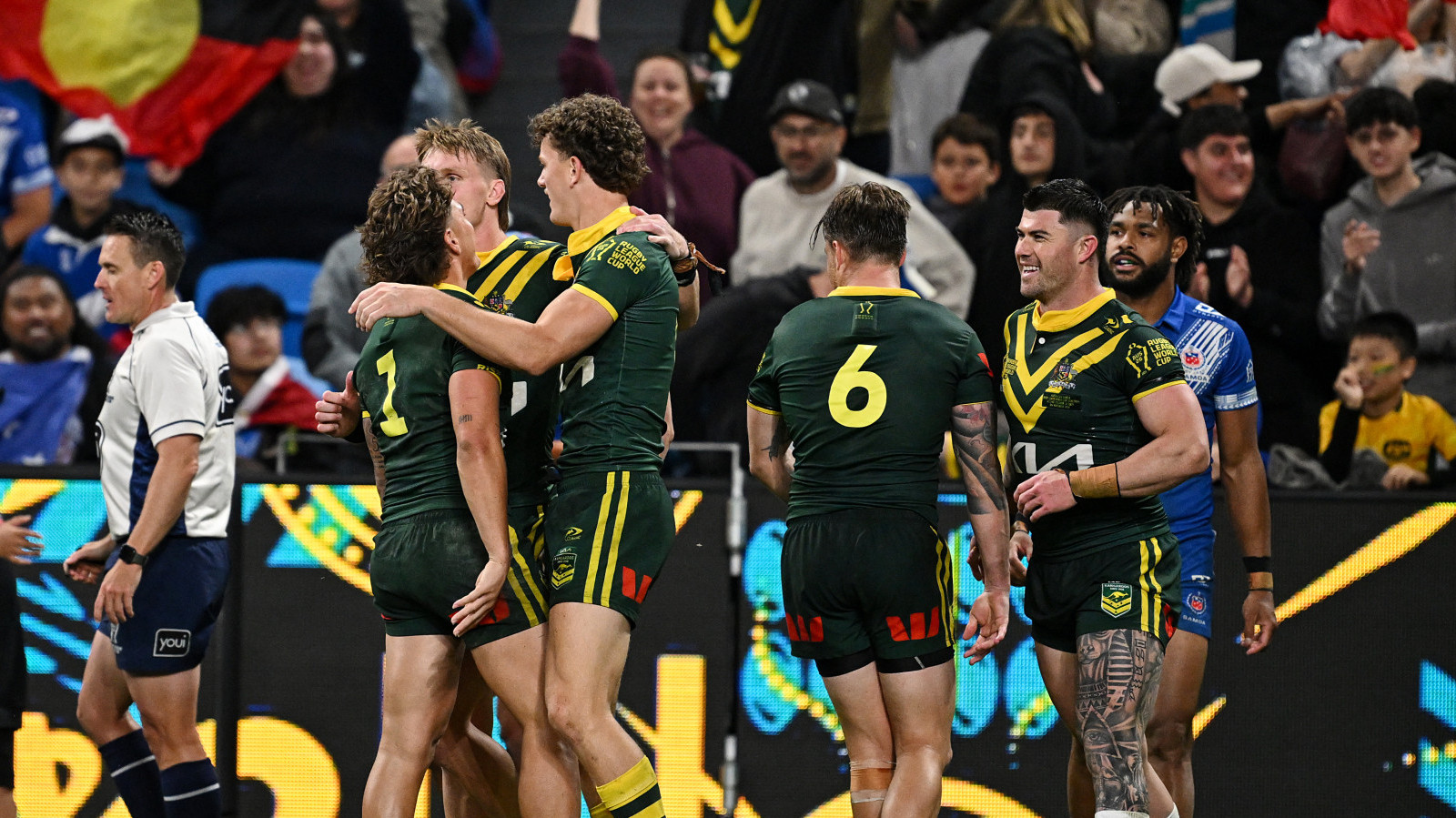
The stage is set for a mouth-watering showdown as Australia and New Zealand prepare to battle it out for World Cup glory in the 2026 IRL Men's Rugby League World Cup Final on Sunday in Brisbane.
Two of international rugby league's biggest rivals will go head-to-head in a contest that promises intensity, physicality and plenty of quality, with bragging rights and the ultimate prize on the line.
Australia head into the decider full of confidence after producing an impressive performance against Samoa in their semi-final, and the Kangaroos have opted for consistency by naming the same 19-man squad.
Pat Carrigan is listed to start, with Keaon Koloamatangi named on the interchange, although the pair could once again swap positions on game day, as they did last Sunday.
Sam Walker retains his place after receiving a late call-up to the six-man interchange for the semi-final. He is named alongside Ethan Strange, Cameron Murray, Reuben Cotter, Latrell Mitchell and Koloamatangi.
The Kangaroos also boast a wealth of big-game experience, with eight members of the squad having featured in Australia's 2022 World Cup Final victory over Samoa. Cameron Munster, Harry Grant, Tino Fa'asuamaleaui, Isaah Yeo, Liam Martin, Murray, Carrigan and Mitchell all know what it takes to perform on the biggest stage.
That experience, combined with Australia's impressive semi-final display, makes them a formidable opponent as they look to finish their campaign with another world title.
New Zealand, meanwhile, have received a significant boost with the return of winger Ronaldo Mulitalo.
Mulitalo missed the semi-final victory over Tonga after serving a one-match suspension following his high shot on Fiji's Ronald Philitoga at Cbus Super Stadium in Round 3. His return sees Charnze Nicoll-Klokstad drop back to the reserves and gives the Kiwis another dangerous attacking option heading into the final.
There is, however, a potential concern surrounding Naufahu Whyte. The premiership-winning Rooster has been named on the interchange despite failing to finish the semi-final because of an ankle injury. Should Whyte fail to recover in time, Leo Thompson is the most likely replacement.
The Kiwis will know they need to produce a huge performance if they are to overcome their trans-Tasman rivals. Their forward pack will need to match Australia's physicality, while their outside backs must take advantage of any opportunities that come their way.
With both sides possessing tremendous individual quality, the battle through the middle could prove decisive. Australia will look to use their power and experience to control the tempo, while New Zealand will be determined to disrupt their rhythm and put the Kangaroos under pressure.
The return of Mulitalo adds another dimension to New Zealand's attack, but Australia have match-winners throughout their squad and the experience of having delivered on this very stage before.
There is little doubt that the Kiwis have the ability to make this a genuine contest, but the Kangaroos will take plenty of confidence from their semi-final performance.
Australia (squad): Reece WALSH, Jack BOSTOCK, Kotoni STAGGS, Brad BEST, Tom TRBOJEVIC, Cameron MUNSTER, Tom DEARDEN, Patrick CARRIGAN, Harry GRANT, Tino FA'ASUAMALEAUI, Jacob PRESTON, Liam MARTIN, Isaah YEO, Ethan STRANGE, Keaon KOLOAMATANGI, Cameron MURRAY, Reuben COTTER, Latrell MITCHELL, Samuel WALKER, Blayke BRAILEY, Lindsay SMITH, James TEDESCO
New Zealand (squad): Kalyn PONGA, Jamayne ISAAKO, Dane GAGAI, Casey MCLEAN, Ronaldo MULITALO, Kodi NIKORIMA, Jahrome HUGHES, James FISHER HARRIS, Jeremy MARSHALL-KING, Moses LEOTA, Isaiah PAPALI'I, Briton NIKORA, Joseph TAPINE, Te Maire MARTIN, Naufahu WHYTE, Erin CLARK, Xavier WILLISON, Keano KINI, Phoenix CROSSLAND, Charnze NICOLL-KLOKSTAD, Scott SORENSEN, Leo THOMPSON